§ · Meet Rebecca Sells
From medicine to colour.
A former clinical doctor, now a certified 12-season colour practitioner. The Colour Doc began with my own analysis, and the same methodical curiosity that drew me to medicine.
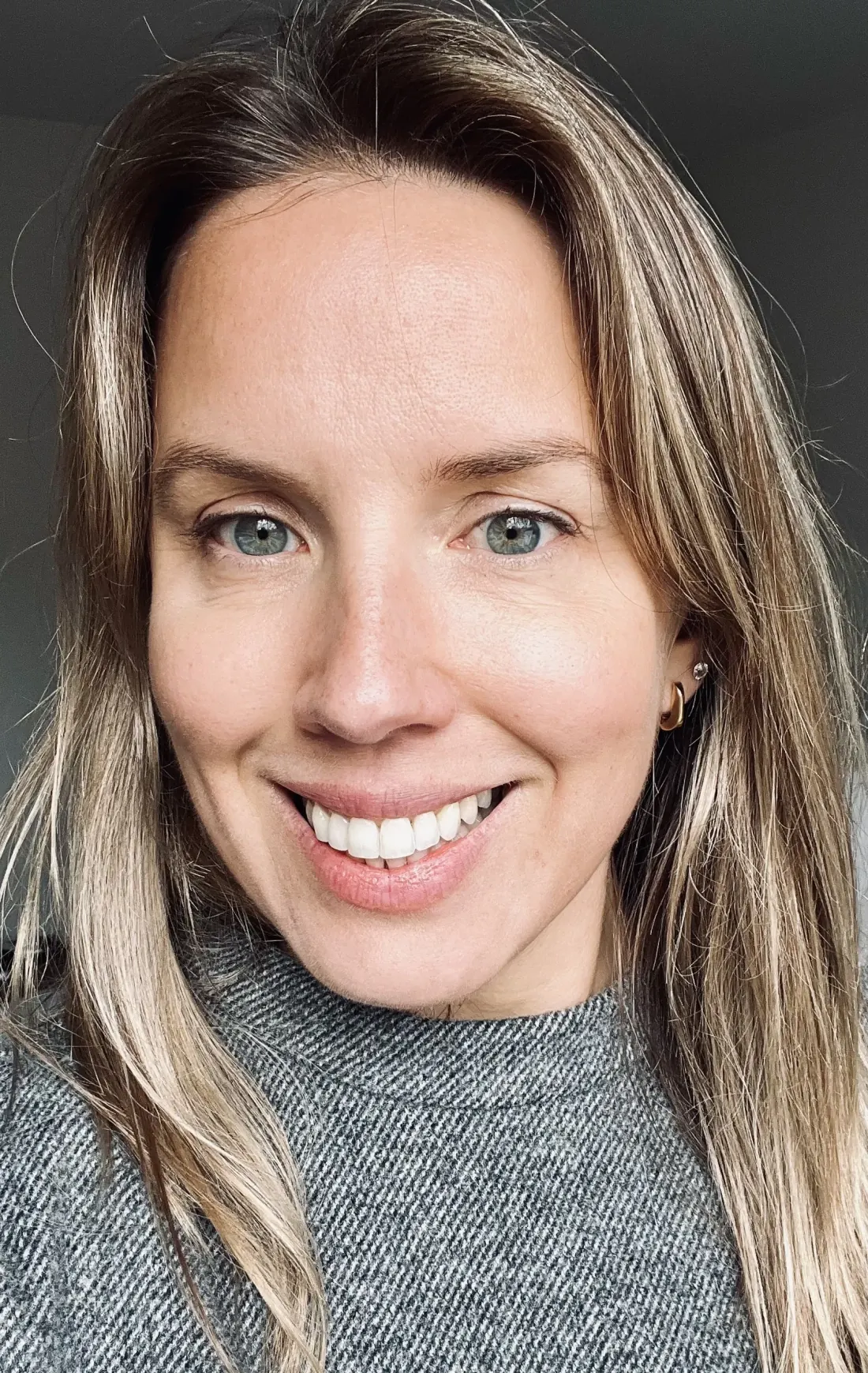
- Certified12-season practitioner
- BackgroundClinical medicine, then medtech
- Practising since2025
I trained and practised as a clinical medical doctor — first in general medicine, then in medical technology, building and refining diagnostic tools. I left full-time work after having children, and somewhere in the blur of new parenthood, my wardrobe quietly became something drab and monotonous. Nothing felt like me.
My husband gave me a colour analysis as a gift. I arrived sceptical. I left, two hours later, with a printed palette and something harder to name — a genuine sense of having been seen clearly, and of seeing myself more clearly in return. My analytical mind would not let the experience rest there. I wanted to understand why the draped colours behaved as they did. Why one made me look rested and the next made me look ill. Why the answer was objective — the drapes showed me what they showed me, without my preference being consulted.
So I went into it properly. I read the literature, worked through the colour theory, and trained as a practitioner. I opened The Colour Doc in Battersea in 2025.
The approach.
I run one appointment at a time, to one client at a time. The session takes two and a half hours — long enough to work through undertone, value, and chroma without rushing any of them. I explain my reasoning as we go: why this drape flatters and that one doesn't, what axis is being tested, what the answer means for the palette. Clients who are curious about the science leave knowing considerably more about colour theory than when they arrived. Clients who are less interested in the theory leave with a palette that simply works.
I see men and women. The method is the same regardless of who is sitting in the chair; the palette is particular to the individual.
The Colour Doc is a home studio in Battersea, a few minutes' walk from Northcote Road, between the two commons. It is quiet, unhurried, and one-to-one — always.
The work is less about saying yes to colours than about understanding the reasons for the yes.
Trained to see.
Colour analysis is, at its core, a perceptual skill. It requires training — not only in the sense of learning a theory, but in the sense of calibrating the eye to observe what drapes actually do to skin in neutral daylight. That calibration takes time and sustained practice.
My training covered the 12-season system in full: the three axes of undertone, value, and chroma; drape sequencing and reading technique; palette interpretation; and the practical translation of a season into wardrobe, makeup, metals, and jewellery guidance. The habits of careful observation that medicine requires turn out to be directly useful here.
§ · In their own words
From recent clients.
Rebecca is incredibly knowledgeable, very personable and clearly an expert in what she does.
Such a warm, reassuring approach. A true expert.
Rebecca made me feel great throughout. I loved discovering what worked, as well as what didn’t, and why.